
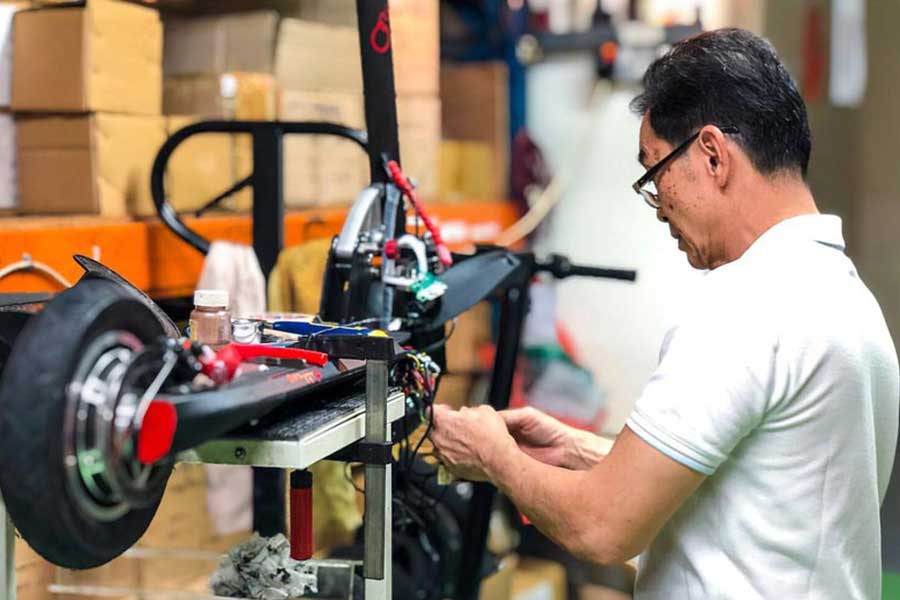
Do you remember that first ride on your e-scooter after you bought it? Everything about it felt perfect — the smooth suspension, quick acceleration, the hum of the motor, and that sense of freedom.
Fast-forward a few months and things might not feel quite the same. The performance has dulled, the brakes squeak, the battery seems weaker. That’s what happens when regular maintenance gets overlooked. It’s normal, but entirely preventable. With a little attention, you can bring your scooter back to that like-new feeling and keep it there.
Regular upkeep is the key to making sure your e-scooter stays reliable, safe, and fun to ride. Below are a few areas that deserve your attention.
Battery Maintenance
The battery is the heart of your scooter. Each one has a limited number of charge cycles — anywhere from 300 to 1000, depending on quality and usage. To get the most life from it, read your user manual to learn the manufacturer’s service recommendations. Store your scooter in a place where the temperature stays between 20 °C and 25 °C (68 °F – 77 °F); extreme heat or cold shortens battery life. Use only the original charger, unplug when fully charged, and recharge when it reaches around 20–30 % rather than letting it run completely empty. Following these simple habits will help your battery last much longer.
Tire Maintenance
Tires have a huge impact on comfort and safety. Keep them in shape and they’ll return the favor. Check tire pressure before every ride and follow the manufacturer’s recommendation. Inspect for cuts, cracks, or uneven wear. Clean off debris, especially after riding on gravel or wet streets. Well-maintained tires mean better grip, smoother rides, and fewer flats.
Brake Maintenance
Brakes keep you safe — don’t ignore them. Check them often and learn what normal feels like so you can spot problems early. Inspect the brake pads for wear; replace them if they’re thin or uneven. Check cables for rust or fraying. If you have disc brakes, adjust the calipers so they aren’t rubbing yet still bite firmly when engaged. A quick check before each ride can make the difference between stopping smoothly and not stopping at all.
Suspension Maintenance
Your suspension absorbs bumps and protects both you and the scooter’s frame. If you have spring or rubber suspension, make sure bolts and screws are snug and properly adjusted. For hydraulic systems, have the oil changed periodically by a professional. A healthy suspension system means a more comfortable, controlled ride.
Electrical System (Motor) Maintenance
The motor doesn’t need constant work, but it does need protection. Keep water away whenever possible. A little splash is fine if you dry it quickly, but avoid rain or puddles. If the motor smells hot or makes grinding noises, stop immediately and let it cool before checking for issues. Avoid over-revving on steep hills or in very hot weather. A little care now prevents expensive repairs later.
Cleaning and Lubrication
Dirt, grit, and rust are silent killers. A clean scooter performs better and lasts longer. Before lubricating, wipe parts clean with a degreaser or damp cloth. Apply a modest amount of lubricant to moving joints or chains — too much attracts dust. Wipe away the excess after each application. Keeping things clean and lightly lubed ensures every component works smoothly.
General Maintenance Tips
Make quick inspections part of your routine: loose screws, odd noises, wobbly parts — catch them early. Stick to a simple maintenance schedule — small checks save big money later. Use a cover when storing your scooter outdoors or in dusty garages. If your model syncs with a mobile app, keep the firmware updated for improved safety and efficiency.
Conclusion
Maintaining your e-scooter isn’t complicated, but it does require consistency. When you take a few minutes each week to check the essentials — battery, tires, brakes, suspension, and cleanliness — you’re protecting your investment and ensuring every ride feels safe and effortless. A little maintenance now guarantees many miles of smooth, quiet, and dependable travel later.
Frequently Asked Questions
Give it a quick inspection before each ride and a deeper check every two to three months, depending on usage.
Light drizzle is usually fine for water-resistant models, but avoid heavy rain and puddles — moisture can damage the motor and electronics.
Follow the manufacturer’s PSI rating printed on the tire sidewall. Slightly under-inflated tires reduce range; over-inflated ones reduce traction.
Keep it indoors at room temperature with the battery charged around 50–70 % to prevent cell degradation.
If stopping distance increases, squealing persists, or pad thickness drops below 1 mm, it’s time to change them.